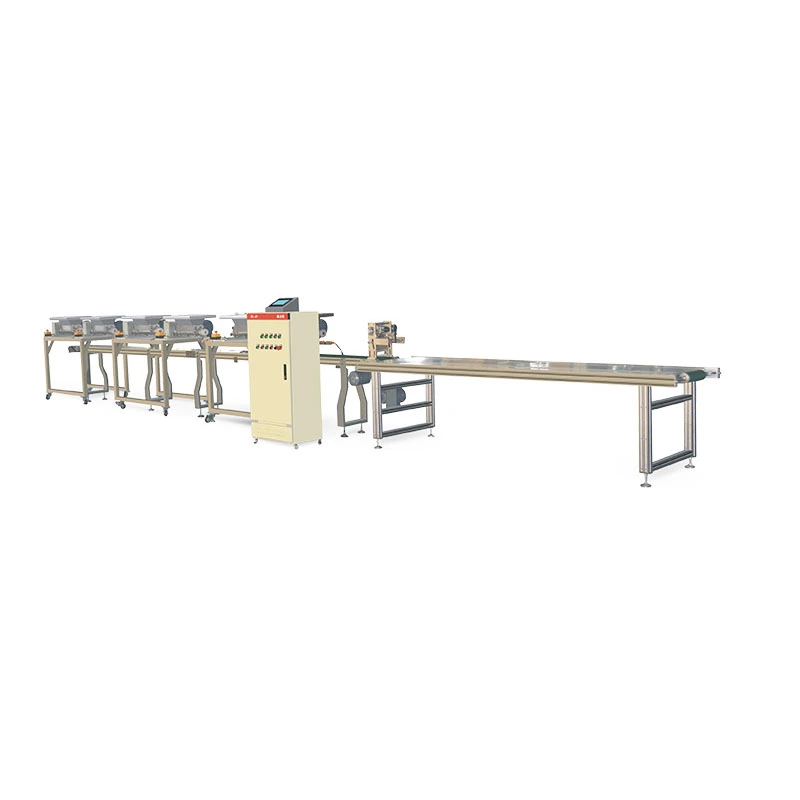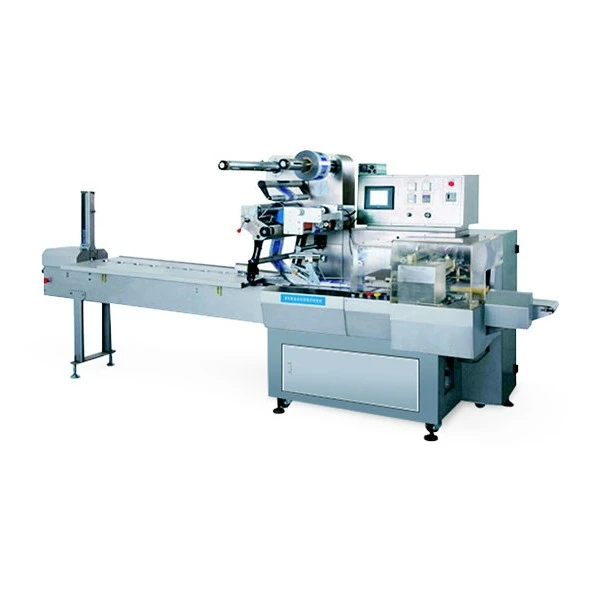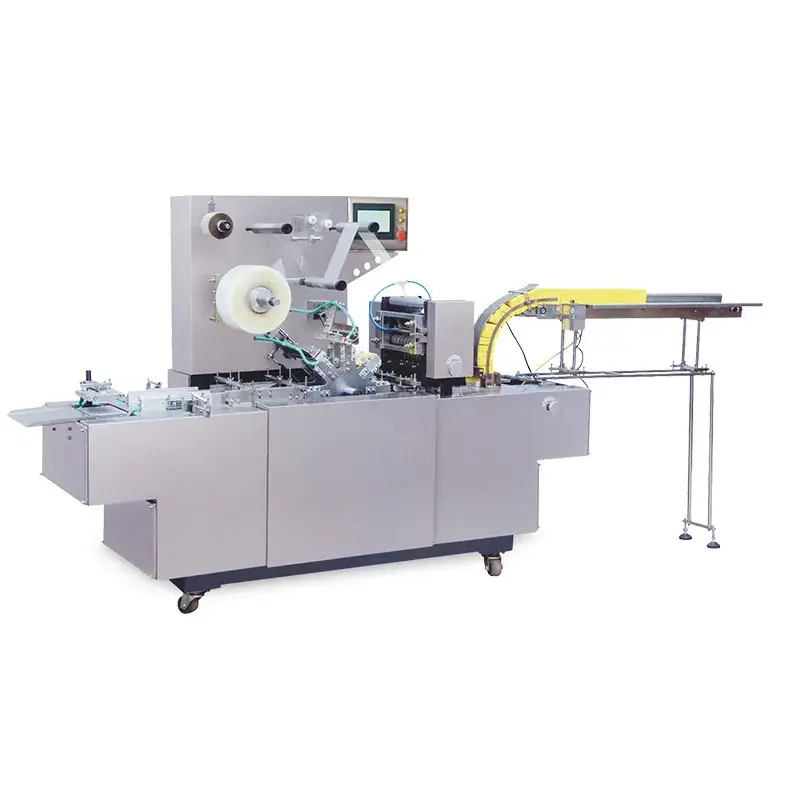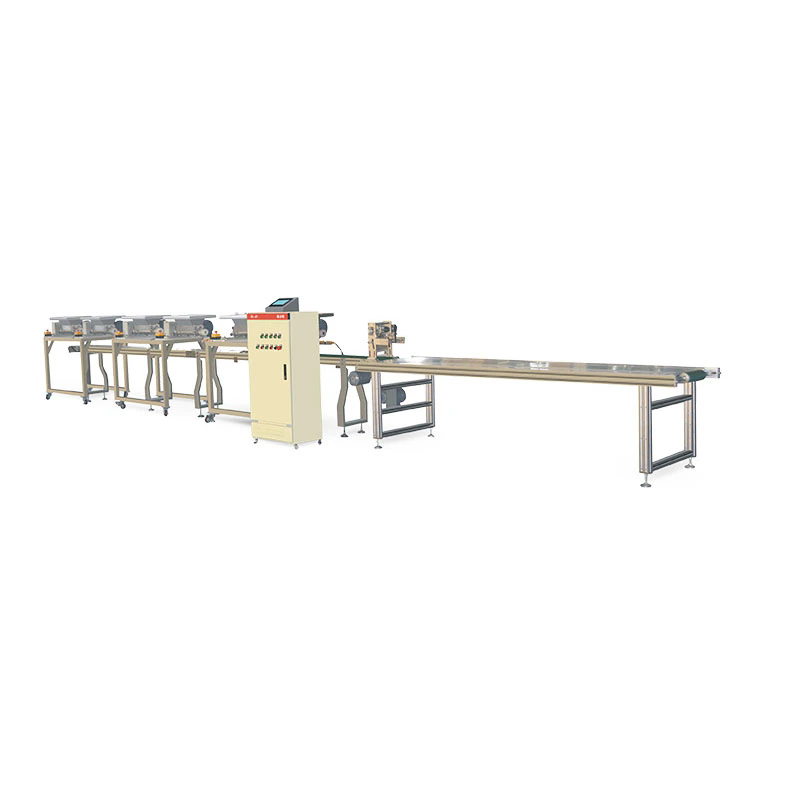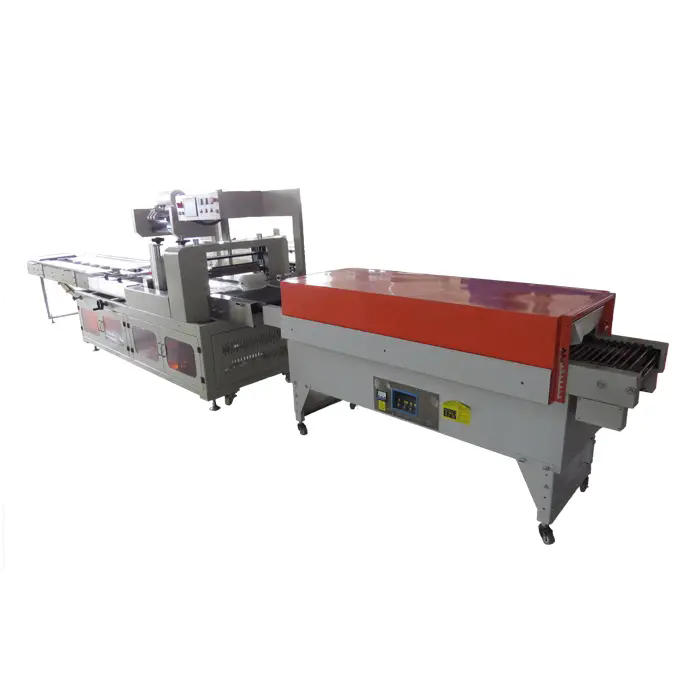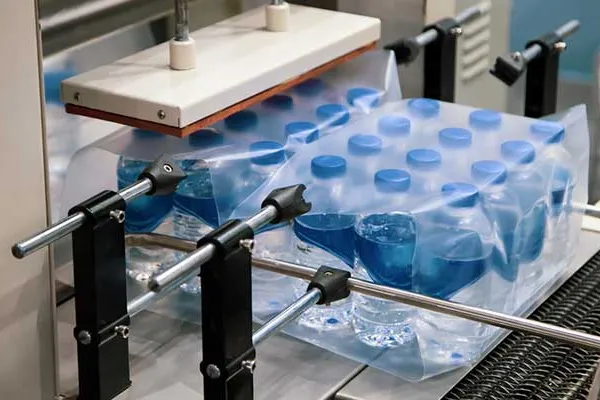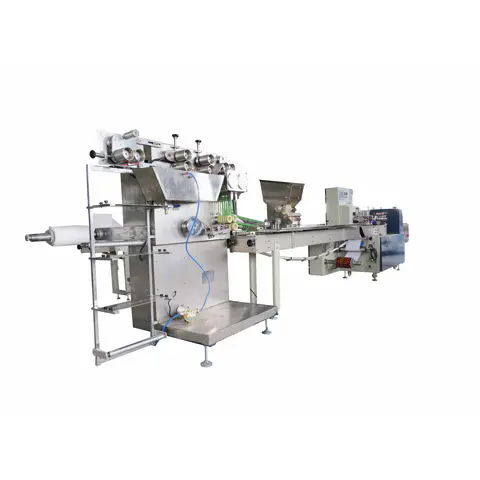
Shrink Wrapping Machines combine controlled film feeding, sealing, cutting, and thermal shrinking to create protective packaging around individual products or grouped items. From retail cartons and printed materials to food containers, electronics, and household goods, automated shrink systems support consistent package appearance and coordinated product handling. Their performance depends on selecting compatible shrink film, maintaining accurate sealing conditions, controlling tunnel airflow, and matching equipment output to the surrounding production line. An effective system must protect the product without exposing it to unnecessary mechanical pressure or excessive heat.
Abstract
Heat-shrink packaging is widely used to contain, protect, and group industrial and consumer products. The process combines a suitable thermoplastic film with controlled sealing and thermal exposure. Automatic equipment may use L-bar sealing, continuous side sealing, high-speed cutting systems, and forced-air shrink tunnels. This technical guide explores shrink film behavior, common machine configurations, temperature control, sealing quality, conveyor synchronization, product handling, safety, maintenance, and production-line integration. It also compares polyolefin, polyethylene, and PVC film characteristics and explains how to select machinery according to package dimensions, product sensitivity, production output, and available installation space. Engineering tables, equipment-selection procedures, and expandable questions provide practical guidance for building reliable shrink packaging operations.
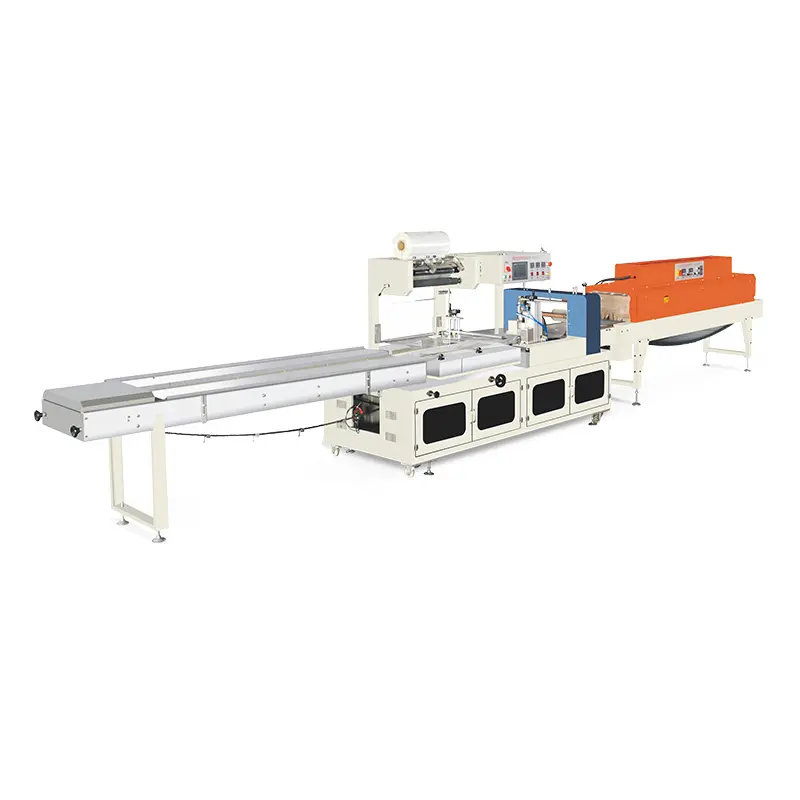
Table of Contents
Click any numbered topic to jump directly to its technical section.
- How Does the Heat-Shrinking Process Work?
- Which Components Make Up an Automated Wrapping System?
- What Types of Shrink Packaging Equipment Are Available?
- Which Shrink Films Are Suitable for Different Products?
- How Do Sealing and Cutting Affect Package Quality?
- Why Are Tunnel Temperature and Airflow Important?
- Which Industries Benefit from Heat-Shrink Packaging?
- How Should Production Speed and Throughput Be Evaluated?
- How Can Shrink Systems Connect with Existing Packaging Lines?
- How Should Engineers Select the Right Wrapping Equipment?
- What Causes Common Wrapping Defects?
- How Do Manufacturing and Inspection Support Reliability?
- How Should Equipment Be Maintained and Operated Safely?
- Frequently Asked Questions
- Final Packaging Engineering Recommendations
1. How Does the Heat-Shrinking Process Work?
Heat-shrink packaging uses a specially manufactured thermoplastic film that contracts when exposed to an appropriate temperature. During film production, molecular orientation creates a shrink response that is activated during the packaging process.
A typical system first surrounds the product with a loose film enclosure. The film is sealed and, where required, cut to create a defined package. The enclosed product then passes through a heated tunnel, where the film contracts around its shape.
1.1. Film Orientation and Shrink Response
Different films have different shrink behavior in the machine direction and transverse direction. The response depends on polymer type, film orientation, thickness, and manufacturing conditions.
A suitable film must shrink enough to produce the required appearance without exerting excessive force on sensitive products.
1.2. Controlled Thermal Exposure
The shrink tunnel uses heated air and controlled conveyor movement to expose the wrapped product to the required thermal conditions.
Temperature, airflow, and residence time work together. Increasing one parameter without reviewing the others can produce uneven shrinking or damage the film.
1.3. Main Process Objectives
- Correct film coverage: Provide enough material to enclose the product without unnecessary loose areas.
- Consistent seams: Create seals suited to the film and package format.
- Controlled shrinking: Achieve an even finish without excessive heat exposure.
- Stable conveying: Move products through sealing and shrinking without unwanted displacement.
- Reliable discharge: Deliver finished packages in a suitable condition for further handling.
2. Which Components Make Up an Automated Wrapping System?
Automated shrink packaging equipment combines mechanical handling, heat control, film movement, and electronic coordination. The precise arrangement depends on the selected machine platform.
Product Infeed
An infeed conveyor positions products for wrapping while maintaining suitable spacing and orientation.
Film Unwinding
A film supply system controls roll movement, material tracking, and film tension.
Sealing and Cutting
Heated or impulse-operated sealing components close the package and separate the required film length.
Shrink Tunnel
Heating elements and circulating air expose the film to controlled shrinking conditions.
Control Interface
Electronic controls coordinate motion, temperatures, sensors, and selected machine settings.
Product Discharge
A downstream section transfers finished packs for inspection, accumulation, or secondary packaging.
2.1. Importance of Synchronization
A well-designed line coordinates product arrival, film feeding, sealing, and tunnel conveyor speed. Incorrect timing may create uneven packages, misplaced seams, or product collisions.
2.2. Sensors and Operator Controls
Photoelectric sensors, encoders, temperature controllers, and PLC systems can support repeatable operating sequences. Stored settings may help operators restore parameters for previously qualified product formats.
These systems still require correct setup and verification. Automatic control does not eliminate the need to assess changes in film or product dimensions.
3. What Types of Shrink Packaging Equipment Are Available?
Machine selection depends on package shape, operating speed, film type, product handling, and the required sealing arrangement.
Our Shrink Wrapping Machines range includes automatic L-bar systems, high-speed side-sealing equipment, and integrated sealing, cutting, and heat-shrink packaging configurations. Each platform serves different production requirements.
3.1. Automatic L-Bar Systems
L-bar sealers form two intersecting seals around a product. They are commonly used for individual boxes, printed materials, and other suitable packages.
Automatic versions can coordinate film feeding, product detection, sealing, and conveyor transfer. Their performance depends on the sealing area, film characteristics, and product dimensions.
3.2. Continuous Side-Sealing Systems
Side sealers use a continuous longitudinal sealing arrangement together with the required cross-sealing operation. They are useful in higher-output lines and applications involving different package lengths.
Film feed, sealing-wheel condition, and synchronized product spacing affect the resulting seam quality.
3.3. High-Speed Integrated Systems
Integrated equipment coordinates product handling, film forming, cutting, and thermal shrinking within one production sequence.
Selected high-speed configurations can support automated production lines, provided upstream and downstream equipment have compatible capacity and communication interfaces.
| Equipment Type | Operating Characteristics | Selection Priority |
|---|---|---|
| Automatic L-bar sealer | Intermittent sealing around defined product formats | Seal area, product dimensions, and changeover |
| Side-sealing machine | Continuous longitudinal sealing with cross sealing | Film tracking, variable lengths, and output |
| High-speed integrated system | Coordinated infeed, sealing, cutting, and shrinking | Line synchronization and stable product flow |
| Heat-shrink tunnel | Thermal shrinking after compatible film enclosure | Heating uniformity, airflow, and conveyor control |
4. Which Shrink Films Are Suitable for Different Products?
Film selection affects package appearance, seam strength, mechanical protection, and the thermal conditions required during shrinking.
Common shrink materials include polyolefin, polyethylene, and PVC. Their properties vary with formulation, film thickness, orientation, and intended application.
4.1. Polyolefin Film
Polyolefin, frequently identified as POF, is used for applications where clarity, flexibility, and package appearance are important.
Suitable POF films can package retail boxes, printed materials, and selected food products. For food-contact applications, the exact film must meet the applicable requirements.
4.2. Polyethylene Film
Polyethylene shrink film is often selected for bundling products or forming comparatively strong multi-item packages.
Its appropriate thickness, shrink response, and sealing conditions depend on product weight and package configuration.
4.3. PVC Shrink Film
PVC shrink film is used in certain non-food packaging applications. It requires compatible equipment settings, appropriate ventilation, and assessment of the applicable material and workplace requirements.
Polymer choice should be based on the complete production environment, not solely on film appearance.
| Film Type | Typical Advantages | Important Considerations |
|---|---|---|
| POF | Clarity, flexibility, and attractive package finish | Film grade, seal conditions, and product compatibility |
| PE | Suitable strength for selected bundled packages | Thickness, shrink force, and tunnel capability |
| PVC | Controlled shrinking in suitable applications | Ventilation, material suitability, and thermal conditions |
4.4. Shrink Ratio and Film Thickness
Shrink ratio indicates how much film can contract under defined conditions. Film thickness influences strength, sealing response, and heating requirements.
The combination should be validated with the actual product. Excessive shrink force can deform flexible cartons or damage fragile articles.
5. How Do Sealing and Cutting Affect Package Quality?
Sealing forms the package enclosure before thermal shrinking. The process must create a consistent seam while leaving sufficient film around the product for controlled contraction.
5.1. Temperature and Contact Time
Seal quality depends on the interaction between temperature, pressure, dwell time, and film composition. Insufficient heat may produce weak seams, while excessive heat can create brittle edges or unwanted film distortion.
Operators should establish an approved sealing window for each material configuration.
5.2. Seal-Bar Condition
Sealing surfaces should remain clean and correctly aligned. Film residue, damaged protective coverings, or uneven contact can create local sealing defects.
Maintenance and cleaning should follow approved procedures after the components have reached a safe temperature.
5.3. Cutting Accuracy
Cutting mechanisms separate the package from the film web. Incorrect registration may leave excess material or position the seal too close to the product.
5.4. Film Perforation
Certain systems use controlled micro-perforations to allow trapped air to escape during shrinking. The appropriate perforation pattern depends on film, package dimensions, and the desired appearance.
Sealing principle: A visually neat seam is not sufficient proof of package quality. Seal continuity and strength should be evaluated under the intended handling and distribution conditions.
6. Why Are Tunnel Temperature and Airflow Important?
A shrink tunnel must deliver enough thermal energy to activate the selected film without exposing the product to unacceptable heat.
Our Shrink Wrapping Machines use controlled heating and conveying arrangements to help achieve repeatable shrinking conditions for compatible film structures and package geometries.
6.1. Tunnel Temperature
The temperature setpoint is only one process variable. Actual film temperature depends on airflow, heat transfer, package size, conveyor speed, and tunnel conditions.
Two packages moving through the same tunnel may respond differently because of their dimensions and thermal properties.
6.2. Air Circulation
Forced-air circulation helps distribute heat around the wrapped product. Poor airflow balance may cause uneven contraction, wrinkles, or loose film around corners.
Adjustable airflow can help operators match the thermal exposure to the packaging format.
6.3. Conveyor Residence Time
Conveyor speed determines how long a package remains in the heated tunnel. Slower movement generally increases thermal exposure under otherwise similar conditions.
Tunnel settings should be qualified as a combination rather than adjusted independently.
6.4. Product Temperature Sensitivity
Heat-sensitive foods, cosmetics, electronics, and other products may have limitations that must be respected.
The finished package should be evaluated for product deformation, appearance changes, and any application-specific quality requirements.
7. Which Industries Benefit from Heat-Shrink Packaging?
Shrink packaging is used across a broad range of sectors. The appropriate machine and film combination depends on package presentation, material compatibility, product sensitivity, and handling requirements.
Food and Beverage
Compatible packaging films may wrap food trays, grouped containers, and retail products when hygiene and material requirements are satisfied.
Publishing and Printing
Books, magazines, notebooks, and stationery can be enclosed to help reduce dust exposure and maintain organized presentation.
Electronics
Accessories, boxed components, and selected electronic goods can receive an outer film enclosure for handling and display.
Cosmetics and Personal Care
Cartons and grouped consumer products can be wrapped for presentation and defined packaging requirements.
Household Products
Suitable bottles, boxes, and multipacks can be bundled or individually enclosed for distribution and retail handling.
Healthcare Products
Secondary packaging may protect selected cartons and kits, subject to the applicable hygiene and product-specific requirements.
7.1. Individual Product Packaging
Individual cartons or objects may be wrapped to create a consistent outer appearance. Film clarity, seam location, and controlled shrinking are particularly important where the product is presented directly to consumers.
7.2. Multipack Bundling
Grouped containers or products require sufficient film strength and a suitable shrink pattern to maintain stability.
Packaging trials should evaluate the completed bundle under realistic handling conditions.
7.3. Tamper-Evident Presentation
A shrink enclosure can provide visible evidence when disturbed in certain packaging designs. However, film wrapping alone should not be assumed to satisfy every regulated tamper-evidence requirement.
For sterile products, a general shrink wrapper is not a validated sterile-barrier packaging process without the necessary specialized qualification.
8. How Should Production Speed and Throughput Be Evaluated?
Equipment throughput should be assessed using the number of acceptable finished packages produced over time, not merely the maximum cycle rate stated for an ideal operating condition.
8.1. Cycles and Finished Packages
Different machine configurations describe output in different ways. A sealing cycle may produce one package or several packages, depending on product grouping and tool layout.
Engineers should confirm the definition of the stated output figure when comparing equipment.
8.2. Theoretical Production Calculation
Illustrative calculation: A machine that completes 60 wrapping cycles per minute and produces one package per cycle has a theoretical output of 60 packages per minute. Actual accepted output depends on feeding, film behavior, rejects, interruptions, and downstream capacity.
8.3. Line Balancing
A shrink wrapper must operate in coordination with upstream and downstream machinery. A faster wrapper cannot maintain a higher overall line output if the cartoning or case-handling station creates a permanent bottleneck.
8.4. Product Variation
Changing product dimensions can affect film length, sealing time, and conveyor spacing. Machines designed for variable formats may reduce adjustment requirements, but each configuration must still be qualified.
Our selected high-speed models include configurations designed for up to 100 packs per minute under defined conditions. Achievable output depends on the exact equipment model and packaging application.
9. How Can Shrink Systems Connect with Existing Packaging Lines?
Integrated shrink packaging requires dependable product transfer, compatible operating speeds, and clear communication between machines.
When selecting Shrink Wrapping Machines for an existing line, we review conveyor height, infeed spacing, control interfaces, film supply, and the requirements of downstream equipment.
9.1. Infeed Connections
The upstream machine must deliver products in a stable orientation and at the correct spacing. Uncontrolled accumulation can cause collisions or inaccurate sealing positions.
9.2. Downstream Packaging
Completed shrink packs may be transferred to labeling, counting, case packing, or accumulation equipment. The discharge system should prevent damage while the film and product return toward ambient conditions.
9.3. Communication and Control
Suitable PLC interfaces and communication functions can coordinate start, stop, ready, and fault conditions across the line.
Depending on the configuration, integration may involve discrete signals, Ethernet-based communication, or other supported control protocols.
9.4. Floor Layout
The installation should provide space for film replacement, routine inspection, tunnel servicing, operator access, and safe movement around equipment.
A compact machine footprint should not come at the expense of adequate maintenance or ventilation clearance.
10. How Should Engineers Select the Right Wrapping Equipment?
Machine selection begins with the packaged product and the intended finished appearance. The best equipment configuration should satisfy dimensional, material, operational, and safety requirements.
10.1. Equipment Selection Workflow
- Identify the product: Record dimensions, mass, shape, stability, and heat sensitivity.
- Define the packaging objective: Determine whether the product requires individual wrapping or bundling.
- Select the film: Confirm polymer type, thickness, shrink response, and application compatibility.
- Choose the sealing method: Compare L-bar and continuous side-sealing arrangements.
- Review product dimensions: Confirm maximum width, height, and length against the machine's working area.
- Determine required output: Establish sustained production speed and expected product variation.
- Evaluate the heat tunnel: Check airflow, temperature control, conveyor dimensions, and product sensitivity.
- Plan integration: Review upstream spacing, downstream flow, and supported communication interfaces.
- Assess factory conditions: Confirm power supply, ventilation, floor space, and maintenance access.
- Verify actual packages: Establish acceptable seam strength, shrink appearance, and production consistency.
10.2. Product Dimensions
The machine's maximum working area must accommodate the actual product and sufficient film clearance. Irregular products may require additional guides or a different wrapping arrangement.
10.3. Handling Fragile Goods
Lightweight boxes, flexible packages, and delicate consumer products may be affected by conveyor movement or film shrink force.
Equipment settings should be established to protect product shape throughout the process.
10.4. Planning Format Changes
Manufacturers processing several product sizes should consider adjustment accessibility, stored settings, guide positioning, and film roll changes.
Any new product configuration should be verified before routine production.
11. What Causes Common Wrapping Defects?
Defects in shrink packaging can originate from the film, sealing station, tunnel settings, product handling, or environmental conditions.
Troubleshooting should identify the process stage where the defect first appears rather than changing several machine parameters simultaneously.
11.1. Loose Film
Incomplete shrinking may result from insufficient thermal exposure, unsuitable airflow, or a film structure that does not match the selected settings.
11.2. Wrinkles and Uneven Shrinkage
Uneven heat distribution, excessive initial film, unstable product orientation, or inappropriate film selection can produce visible wrinkles.
11.3. Weak or Broken Seams
Sealing defects may result from unsuitable temperature, insufficient contact, dirty sealing surfaces, or film incompatibility.
11.4. Film Burn-Through
Excessive heat exposure can create holes, deformation, or brittle regions. Tunnel temperature, airflow, and residence time should be evaluated together.
| Observed Defect | Possible Cause | Inspection Focus |
|---|---|---|
| Loose wrapping | Insufficient shrinking or unsuitable film | Tunnel conditions and material compatibility |
| Uneven wrinkles | Unbalanced airflow or excess film | Air circulation and film dimensions |
| Weak seams | Improper sealing conditions | Temperature, contact, and seal cleanliness |
| Burn-through | Excessive thermal exposure | Tunnel temperature and conveyor residence time |
| Misaligned packs | Unstable transfer or incorrect registration | Infeed guides, sensors, and timing |
12. How Do Manufacturing and Inspection Support Reliability?
Reliable shrink packaging depends on equipment construction, precise mechanical alignment, suitable temperature control, electrical safety, and verified operation.
At Huaze, we develop packaging machinery and integrated production-line solutions through our manufacturing and engineering operations in Wenzhou, China.
12.1. Our Engineering Capabilities
Our company has more than a decade of mechatronics experience and operates with engineering resources dedicated to packaging machinery design, production, and system integration.
We provide automatic L-bar equipment, side-sealing configurations, high-speed heat-shrink systems, and related packaging-line solutions.
12.2. Mechanical Manufacturing
Accurate machining and assembly help maintain sealing alignment, film tracking, and stable product movement.
Mechanical quality should be evaluated together with the electrical and control systems because each affects the machine's operating consistency.
12.3. Control-System Verification
Temperature sensors, conveyor drives, product detection, safety interlocks, and operating controls should be checked during equipment commissioning.
Controlled startup and shutdown sequences are particularly important where thermal equipment operates alongside automated conveyors.
12.4. Machine Acceptance
Acceptance testing should use products and packaging materials representative of the intended production operation.
Relevant checks include sealing consistency, finished package appearance, film tracking, throughput stability, alarm behavior, and safe equipment operation.
12.5. Customized Integration
We review product drawings, film specifications, intended output, factory layouts, and interface requirements to develop appropriate machinery configurations.
Engineering coordination helps determine whether a standalone system or a connected production arrangement is the better fit for the intended packaging process.
13. How Should Equipment Be Maintained and Operated Safely?
Shrink packaging equipment combines moving machinery with heated components. Maintenance should address both mechanical reliability and the risks associated with thermal operation.
13.1. Daily Checks
Operators should examine film tracking, conveyor condition, sealing surfaces, emergency stops, and unusual machine noises according to the approved operating procedure.
13.2. Sealing-System Maintenance
Residue can accumulate around sealing components. Cleaning should be performed using approved materials and only after the equipment has been isolated and reached a safe temperature.
13.3. Tunnel Inspection
Heating elements, temperature sensors, fans, filters, and conveyor components should be inspected according to the maintenance schedule.
Restricted airflow or inaccurate temperature measurement can reduce package consistency.
13.4. Electrical and Mechanical Safety
Guards, interlocks, and emergency-stop functions should be verified. Personnel must not bypass safety systems to access moving or heated components during operation.
13.5. Maintenance Checklist
- Film feed: Inspect roll supports, guides, and tracking components.
- Seal surfaces: Check cleanliness, alignment, and visible wear.
- Conveyors: Monitor belt condition, drive alignment, and product transfers.
- Heat tunnel: Inspect airflow, fans, sensors, and heating elements.
- Machine controls: Review alarms, safety devices, and operating settings.
- Changeover: Verify the selected film and machine settings before restarting production.
All servicing should follow appropriate energy-isolation procedures. Operators should confirm that residual heat, moving parts, and electrical energy have been made safe before maintenance begins.
14. Frequently Asked Questions
Explore common technical questions about shrink packaging equipment, sealing systems, film compatibility, heat tunnels, production lines, and maintenance. Click a question to reveal its answer.
How does an automatic heat-shrink packaging system work?
It surrounds the product with compatible shrink film, seals or cuts the enclosure as required, and transfers the product through a controlled heated tunnel where the film contracts around the package.
What is the difference between an L-bar sealer and a side sealer?
An L-bar sealer creates intersecting seals around the package. A side sealer uses a continuous longitudinal seal together with cross sealing, which can support different high-output or variable-length applications.
Which types of film can be used for shrink packaging?
Common materials include POF, PE, and PVC shrink films. Compatibility depends on the machine, film thickness, polymer composition, sealing method, and required thermal conditions.
How is the correct shrink tunnel temperature selected?
Tunnel settings should be established using the exact film and package. Temperature, airflow, conveyor speed, and product sensitivity must be qualified together.
Can one system handle several product sizes?
Selected machines support adjustable settings and product-size changes. Each product must remain within the machine's operating range, and appropriate setup verification is required.
Why does shrink film become wrinkled?
Wrinkles may result from excess film, uneven heat distribution, unsuitable material, or unstable package movement. The first step is to identify whether the defect develops during sealing or tunnel shrinking.
Can heat-shrink equipment package food products?
Yes, for suitable applications using packaging materials and operating conditions that meet the applicable food-contact, hygiene, and product protection requirements.
Does shrink film guarantee waterproof packaging?
No. A shrink enclosure may reduce exposure to dust or moisture, but package water resistance depends on seam integrity, film structure, perforations, and the complete package design.
How can a wrapper be integrated with other machines?
Suitable conveyor interfaces and control signals allow coordination with upstream packaging equipment and downstream handling systems. Integration must account for product spacing, throughput, and safe stopping behavior.
What limits the actual production speed?
Actual output depends on product size, sealing cycle, film response, infeed conditions, machine interruptions, rejects, and downstream handling capacity.
What causes weak or broken film seals?
Possible causes include incorrect sealing temperature, insufficient contact, contaminated seal surfaces, and incompatible film characteristics.
How often should shrink wrapping equipment be inspected?
Inspection frequency should follow the machine's maintenance instructions and reflect operating hours, production intensity, environmental conditions, and component wear.
What information is needed for a customized machinery inquiry?
Provide product dimensions and weight, packaging film type, required output, finished-package requirements, factory layout, electrical supply, and intended connections with other equipment.
15. Final Packaging Engineering Recommendations
Reliable shrink packaging requires coordinated selection of equipment, film, sealing conditions, and thermal processing parameters.
Machinery should be matched to the actual product rather than selected solely by its maximum stated output. Package dimensions, heat sensitivity, desired presentation, and the surrounding production environment influence the best configuration.
Film selection also matters. POF, PE, and PVC structures respond differently to heat and mechanical loading, so the complete sealing and shrinking process must be developed around the approved material.
Sealing alignment, tunnel airflow, conveyor speed, and product handling should be evaluated together. Adjusting one parameter without considering the rest of the process can introduce new defects.
Production integration is equally important. Equipment communication, stable infeed spacing, safe fault recovery, and compatible downstream capacity support consistent operation across the complete line.
Preventive maintenance and controlled inspection help preserve equipment performance. Regular attention to sealing components, heating systems, conveyors, and safety devices reduces the likelihood of unexpected operating problems.
Through suitable machine selection, film qualification, production testing, and ongoing maintenance, manufacturers can establish dependable shrink packaging processes that support attractive finished packages and stable industrial production.
↑ Return to Table of Contents